

Making Writing Your Personal Muse: An Interview with Antoniya Atanasova
- Elvira Dimitrova
- Jun 2, 2018
- 10 min read
Antoniya is one of the most amazing people I have ever had the pleasure of knowing and since we share the same profession, I had the opportunity to get to know her better. She is that kind of person who always sees the best in people and resonates positive energy all the time. Toni has a great smile and even a bigger and warmer heart. She is a teacher during the day and she rocks at it but in her heart and soul, she is one hundred percent a Writer. This is who she is in the core and she shows it every day by staying true to her nature, by writing. One sentence from her is enough to inspire you and to make you realize how much you can do if you only devoted the time and energy to it. She already has her first novel released in Bulgaria. It’s called Mono. However, she also has multiple stories, poems and articles that could help you get a grasp of the person she truly is, or as she puts it: “I hope my invisible typewriter would introduce me. With my verbal weapons.” So even though I’m trying to introduce her to you, she is completely right. No amount of words I write here would do a better job than her own pieces. This interview is not aimed at two English teachers talking in a language that is not their mother tongue. On the contrary, I wanted not only Bulgarians but also those of you who are foreigners to be able to explore her experience and insights on what it’s like to be a writer and what it takes to get published.

When did your passion for writing start?
“I have always tried to avoid clichés but unfortunately with this answer I’ll have to use one of them. I ‘ve been writing ever since I was a little child. Terrible pieces of writing, to be honest. Still, there was some kind of spark and my Literature teacher saw the potential. I haven’t stopped working and I’m probably the living proof that you can produce a decent piece of writing out of a total rubbish. The only condition for this to ever happen is to write, write, write. Nothing more, nothing less.”
Do you remember how old you were when you wrote your first piece?
“I really want to recall that very moment but I’m not sure. Probably during my early teenage moments. I think I had a fully developed piece of writing with a beginning and an ending (and not just some lyrical fragment) , maybe at the age of 12.”
Do you still keep it?
“Actually, not that memorable first one, but I have got a notebook which is kind of a collection of works and I keep some of my poetry from around that time in it. From my wiser and more mature point of view, it’s not something to feel proud of which actually makes me happy as it shows development. It would mean I haven’t moved at all, otherwise.”
What inspires you the most when it comes to writing?
“So, there are two things. The first one is love, especially unrequited love. Broken hearts are the real thing when it comes to inspiration. Bittersweet emotions. As Kurt Cobain once said ‘Thank you for the tragedy I need it for my art’. So I thank you all for the love you didn’t return back to me,” she chuckles. “I mean puppy love here, the early stages of my life. What inspires me at present is: social injustice, words (food-for-thought words to be more precise), the right ones said anywhere by anyone, memories (our personal time machines), human beings with intriguing personalities, travelling…
The second thing is music. Lyrics, song titles, music in general. One of my favourite contemporary Bulgarian writers said that, ‘In order to be a successful writer/ novelist, you should look at pieces of art and listen to music. These are the two most important conditions.’ Art in all dimensions, actually.”
Has music always influenced you?
“Now that I come to think about it, consciously it has been a great part of my life for the past few years. During the earlier years of my life it had still influenced me but subconsciously, hands down. No matter what I listen to, the result is always the same. Sheer bliss and a flood of ideas. For me, the depressing, melancholic and gloomy tunes are the deep ones. Generally, I don’t find happiness inspiring. It’s not the right muse for me. Another contemporary Bulgarian writer said, ‘When you’re happy just enjoy the moment, don’t write.’ That’s undoubtedly true.”

What is the greatest obstacle you have had to overcome when it comes to writing?
“I reckon I could produce a whole book about obstacles. Unfortunately, every single time a question like this comes to my mind it’s the human factor that provokes certain emotions which I cannot avoid.
To start with, living in a dream world was the first bitter disappointment. I thought all writing people support one another. Well, this is not exactly the case as it turns out. We can all read between the lines. So be a realist. Don’t build castles in the air. Not too many, though. Build them on earth and in your writing.
The second thing is that I have always imagined that the successful writers could give you a few tips about your future work and what you could do but it’s like some kind of a secret craft. It is always thought that the relationship between an aspiring writer and an established writer should be parent-child like. The renowned ones should treat the younger ones as if they were their fathers and they should guide them, be with them. But no worries - there are noble men out there. It's just a bit harder then expected to reach out and find them.
Another obstacle is the fact how difficult it is to publish and here, I mean publishing houses and (I have coined my own term for this) their lack of ‘culture of refusal’. They don’t know how to tell you ‘no’. They do not want to communicate at all. As if the authors sending the manuscripts are some intruders, unwanted, spam-like creatures, literature fleas.
But he who laughs last, laughs loudest - my rephrase, obviously! None of these obstacles, objective or not, are threatening enough. They are just stones you trip over on your way to the mountain. Nothing to write home about.”
Are there any other reasons that prevent a writer from publishing a novel?
“It is an individual case each time plus the aforementioned situations. And that reminds me of the people who would like to keep their talent a secret instead of sharing it with the world. They have just wisely foreseen the meaninglessness of all efforts. We all know somebody dealing with art who says ‘’what’s the point?’’ and I think that to some extent they are right. At the end of the day, what’s the point, like really? You publish. You have a bestseller. You sign autographs. You are famous. What’s the point? And how long does it last? The candyfloss effect (if there is such). As it is said in the Bible: ‘Vanity of vanities, /vanity of vanities! All is vanity. /A generation goes, and a generation comes, /but the earth remains forever’. But still let’s not forget that art is also a social activity. If you don’t show it, then what’s the point? And here comes the paradox.”

At the end of the day, what’s the point, like really? You publish. You have a bestseller. You sign autographs. You are famous. What’s the point? And how long does it last? The candyfloss effect (if there is such). [...] But still let’s not forget that art is also a social activity. If you don’t show it, then what’s the point?And here comes the paradox.
What would you recommend to those who actually want to publish but face some different obstacles? What can they do to get past their problems?
“In order to find the right publisher, editor and the whole team you could work with, you shouldn’t lose your way and you shouldn’t lose your focus. The focus is writing and good writing. Not just any writing. So you should read non stop and write and while doing this, there are two ways to find an editor. The first one is, if you’re ready to invest in yourself and if you’re OK with this, to self-promote and be the producer yourself. With some finance you can get published. So this is the first and quite certain way, which I understand. I think however that publishing houses have got a great role, too. One of their roles is to be the “filter”. And to be the pillars at the gates of literature. They're at the doorway and they should decide whether you deserve to enter that kingdom of literature or not. In that kind of situations where you pay for the whole process, you just have the key and you enter without being sure whether you deserve to be there.
So then the other option is that you just get a list of all the publishing houses that you can think of. You have to check if they publish Bulgarian authors (depending on your nationality and language of course) and to send them a manuscript. Before you do that, I would recommend that you first read a book which is called Getting Published or any of that sort. That would give you some knowledge about the etiquette of sending a manuscript because it turns out that there is such and I ‘ve only found out about it recently. That’s a good base.
Do it the way it has to be done. Be informed. And you’re already one step ahead.”
Let’s talk a little bit about your novel. Where did the idea of Mono come from?
“That embryo has been growing inside of me for quite a period so that was a tough literature pregnancy because in a way it has been with me throughout my life. Upheaval: the word to describe the delivery process. Mono’s not entirely fiction. Fiction and non-fiction are entangled or maybe I’m lying to you in order to protect some people,” she says laughing. “And it’s everything that has disturbed my soul. I was probably born with this idea. I was absolutely convinced that it was going to be released one day. I had dreamed of the whole process. Mono is my life so that’s why I think it touched so many people because it’s really honest. The preparation for my first book included almost all the people I have met and almost all the people who have scarred me in a way.”

What prevents you from leaving a piece of work unfinished when you face difficulties with it, like a writer’s block, for example?
“Sometimes an idea sounds geniuslike. And then you sit down to pen it and it dies in your hands; it was not as good after all. That's one case. There are so many instances!
A writer’s block is something that I have experienced but only temporary. Actually, sometimes when I read particular writers they are so good that I don’t want to write. It’s like “Yes! This person exists in this world!” He (because the authors of the books I read are usually a "he") exists and I compare my writing to their writing and I want to be where they are in terms of style and ideas. Stephen King said that the difference between a professional writer and amateurs is that when you are a professional you just sit and write. You don’t wait for that cold or hot period to come, like inspiration, or muse, or the atmosphere and so on. No. It’s just you sit down and you write. And I think it works all the time. I don’t wait for inspiration to come. You should be really strict and disciplined. So whenever I have a book in mind, I just write every single day as a soldier. It’s my personal march. Wording.”
What’s next for you?
“Next for me is a collection of short stories. The book is fully completed. Very soon the editing process will be finished so I hope that autumn is not going to bring me depressions anymore,” she says with a humorous tone again. “It’s going to be a long awaited season: the second book syndrome season.”
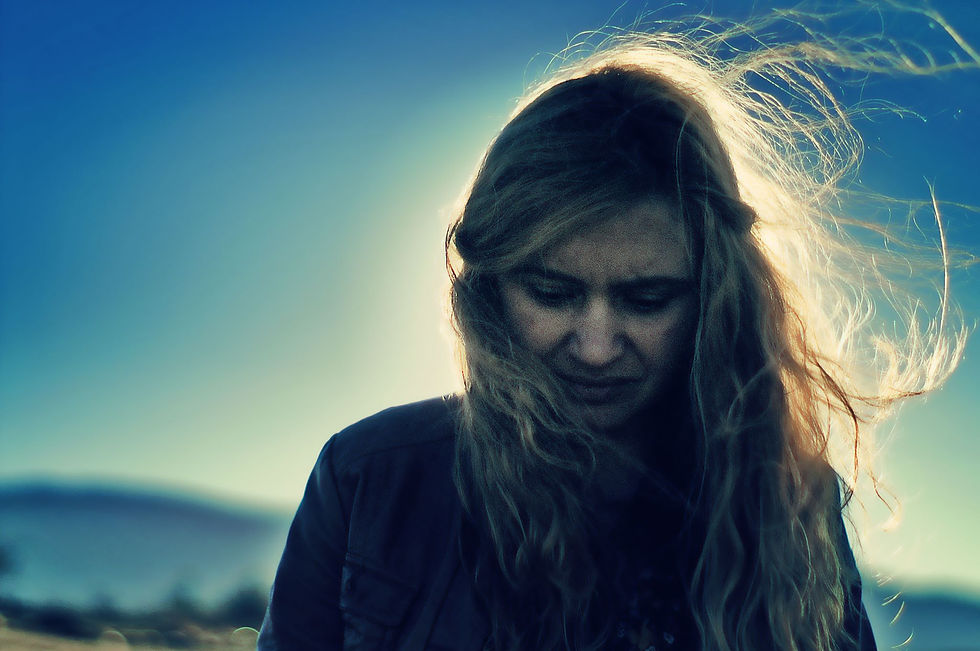
No. It’s just you sit down and you write. And I think it works all the time. I don’t wait for inspiration to come. You should be really strict and disciplined. So whenever I have a book in mind, I just write every single day as a soldier. It’s my personal march. Wording.
What advice would you give to those in the early stages of being a writer? How can they get better?
"The first one is to visit creative writing courses. For example, it can be only a piece of advice that could change your whole perspective and that brings confidence. Also, one of the positives of the creative writing courses is the homework. Every week there is a piece of writing. Besides, meeting like-minded people is immensely stimulating.
Secondly, one of the things that helped me organize my thoughts, knowing how a writer’s thoughts can be very chaotic, is to keep a writer’s journal everywhere you go. That’s essential. You can put everything in there. I include all that impresses me. It’s usually quotations from the people I meet on a daily basis. And of course music lyrics.
And finally, everything you need to know about writing is mentioned here:”
(The link has been provided by Antoniya for the readers)
I hope you’ve enjoyed this interview and that you have found a source of inspiration or a different insight into what it’s like to be a writer. We are planning on releasing a Bulgarian interview with Toni too, so stay tune. Feel free to leave any additional questions you have for her in the comments. To finish off, I would leave you with a little bit of the beginning of Mono which has been translated into English by Antoniya herself:

Mono: I wish you were not here
A novel dedicated to the silence remaining, after a loved one has gone.
"Love must be kept in quarantine , the way cholera and plague are , as it causes devastation, greater than they do".
Ivan Vazov
Love is distributed so unfairly.
When I first saw you I last saw myself for the very last time then. You were sitting in a once burned down library, holding a notebook - shaggy, with tiny marks on one of your cheeks, marking your not so long ago waking up, wearing a Christmas sweater, despite the fact it was some-April-day. Your absent-mindedness disappeared when I caught your sight.
As if evaporated, it got absorbed by the books of that kingdom of knowledge. You approached me, what exactly were your words, how did you enchant me…not so easy to remember. Why me? Again- no recollections.
Your eccentric peculiarities – charming and heart-melting, though disturbing at the same time.
It is some-April-day once again. This time you’re not here in my days and nights. Some-May-day is about to come, some-June-day and all genres of days are gathering on that life wire. These swallows at the end of the summer. All is the same and will be, but different as well. As the boy with unkempt hair coming from that library place is no longer coming back. Not coming back to me.
It’s unbearable. That pain of mine. Love ulcer. I feel dizzy - gastritis dizzy.... Will I manage to paint it with words?


Comments